When you start living with chronic pain/illness, it doesn’t take long before you discover saying “I’m fine” is easier. It’s an easier response that telling the truth. It protects you and the person you’re talking to from getting too deep into what you’re going through. But, sometimes it would be nice to just shout the truth instead of going with “I’m fine” because it’s easier.
We’re All Guilty
You’re not alone. We’re all guilty of automatically lying when asked the dreaded question, “How are you?”. It doesn’t even register that it’s a lie because you’re in what I call “survival mode”. You’re pushing through and it’s easier to say “I’m fine” and move on with your day. At least, that was my experience for a long time.
I wouldn’t even think about the response I had just given. It was never an intentional lie. It was more of an automatic response. Did the person asking really want to know the truth? The hard truth? Did they really want to hear me say “I’m not doing good at all! I’m in a lot of pain and I don’t know how much more of this I can take“. Did the poor, unassuming individual who was just being kind really want to know that I was drowning? Because that’s what was happening; I was drowning. I was drowning, slowly, a little more each day.
First, We Must Admit
Let me be transparent. I’m a “pusher”. If you’ve not read my story, it helps to explain how I’ve been a “pusher” since I was a little kid. I was used to pushing through pain and powering through whatever my body threw at me. So, my first step was actually admitting that I was really struggling. It took a long time. I pushed myself way too hard for way too long because of some deep rooted beliefs and fears I had.
The signs that I was pushing too hard had been screaming at me long before a couple key things transpired that got my attention. “I’m fine” is easier than giving the sorted details of what you’re going through. Although, any individual well versed in reading body language would not have a very hard time seeing “I’m fine” wasn’t the truth. It’s just simpler in most cases.
Speak the Truth
With time, I started to realize that I had to stop sugarcoating what I was dealing with and speak the truth instead of just saying “I’m fine”. It took me getting out of my comfort zone to find the right phrases to use. I didn’t have a problem speaking the truth to my family and close friends. I struggled the most with coworkers and when I was places like church.
Church was complicated for me because I’m a pastor’s wife. My husband was the pastor of the church where we were attending at the time and I didn’t always know what specifics to share about my condition or my feelings regarding it. Most people assume the pastor’s wife has it all together. I definitely did not and still don’t! Being a pastor’s wife didn’t make me superhuman. I struggled spiritually for a long time and as I was battling all this I didn’t feel confident in knowing what to share and what not to.
Breaking the “I’m Fine” Cycle
My coworkers were a large, diverse group and I was close with a few. I started to break my “I’m fine” habit by speaking more openly to those I was not quite as close to. You know the people you can speak freely with most of the time but you don’t tell them everything that’s going on in your life? That’s the group I started with. When they asked me how I was, I started to respond with phrases like: “Today’s not a good day” or “Today’s a hard day”. Sometimes I would say “I’m in a lot of pain today”.
I wasn’t perfect at this. There were those individuals who I knew didn’t know the first thing that was going on with me and in those cases I sometimes still resorted to the standard “I’m fine”. I had reached a time that I needed to be brutally honest with myself and others about what I was going through. Of course, many wouldn’t know how to respond and others responded perfectly. It wasn’t about their response; it was all about me recognizing the hard truth of what was happening in my life.
Speak the Truth With No Regrets
I never felt bad for being honest about my condition when asked and I always answered any questions. When people asked me questions about my hip and its’ complexities and I explained, it seemed to help them better understand why I was missing work a lot and having such a difficult time.
Sometimes, I could tell the individual on the receiving end of the “Today’s a bad pain day” response didn’t know what to say back. It was plain they either didn’t know how to respond, felt bad for me or felt helpless themselves to find the right words to respond with. I never regretted speaking honestly about how I was doing on any day because I was trying to be more transparent.
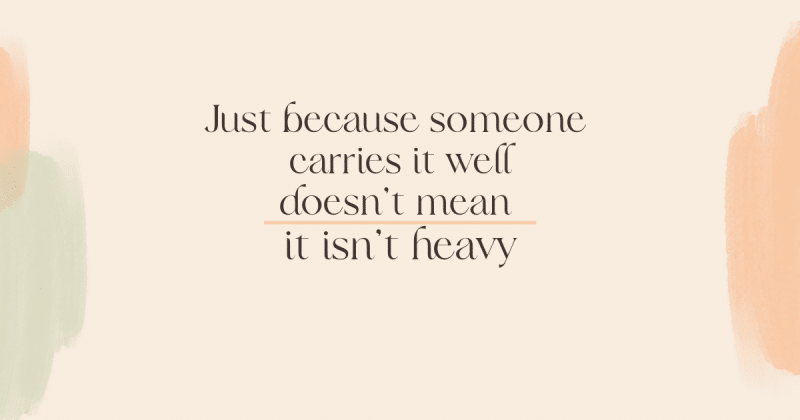
“Just because someone carries it well doesn’t mean it isn’t heavy”. Are you a pro at carrying heavy things like me? I didn’t mean that literally! I have always carried the weight of chronic pain/invisible illness really well. But, that doesn’t mean it isn’t heavy. It’s such a HEAVY weight! Finding a way to speak the truth about your condition helps to lighten the load a bit and every little bit helps!
In Conclusion
In the book of Ephesians 4: 25, the Bible says “Wherefore putting away lying, speak every man truth with his neighbor; for we are members one of another.” We must be careful to always speak the truth, even about our conditions. Speak the truth even when it’s hard for you and the person asking you how you’re doing.
We’re all guilty of just saying “I’m fine” when we’re not because it’s easier. Admitting the truth that we really aren’t “fine” to ourselves is a big first step. But, it’s a critical first step towards allowing ourselves to accept the hard truth that our body isn’t the same as it once was. Accepting the truth about what we’re going through and finding a way to speak the truth with no regrets to those we come into contact with on a regular basis helps us to begin carrying the weight of chronic illness a little better. Will you speak the truth the next time you’re asked how you are? Or, will you just reply “I’m fine”?
Leave a Reply